

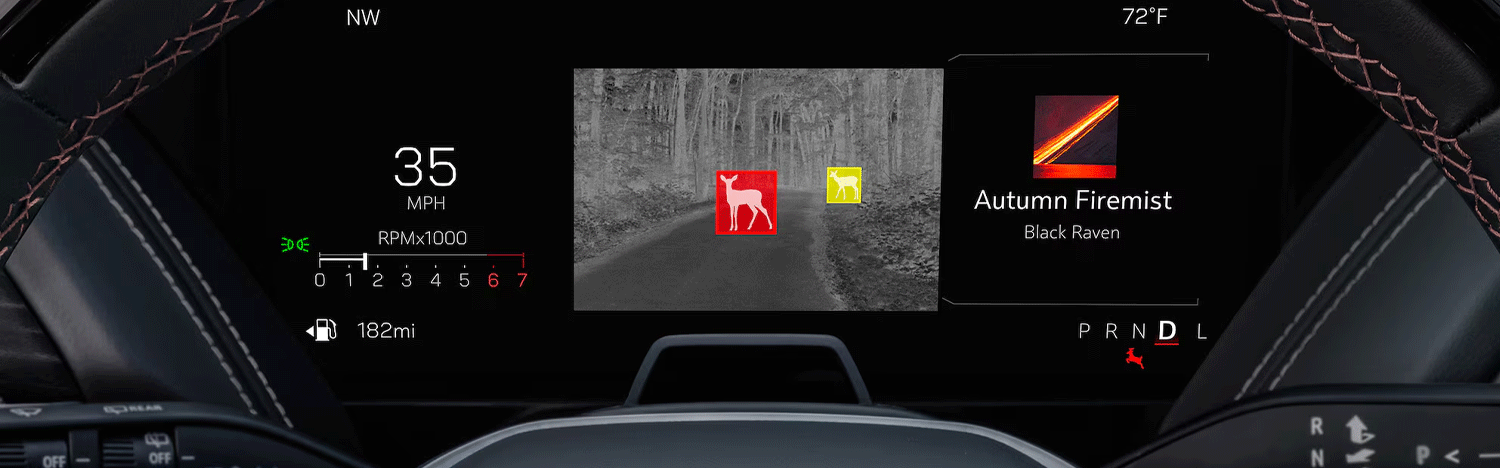
Safely navigating the roadways after sunset is a top priority for modern drivers. However, traditional vehicle lighting has physical limitations, particularly when dealing with poor peripheral visibility or obstructed views on dark, outskirts roads. To mitigate these risks, GMC has introduced its Night Vision thermal-imaging system, which utilizes advanced sensors to alert drivers to potential road hazards.
Operation and Functionality
At the core of the system is an infrared sensor strategically placed in the vehicle's lower grille. This sensor can scan the path ahead for heat signatures of living beings, such as pedestrians and animals, at distances of roughly 330 feet. By visualizing these heat signatures, the system creates a thermal image that is displayed on the head-up display or the driver information screen.
The system uses contrast to ensure clarity: warmer heat sources are rendered in bright white, while cooler environmental elements remain dark. To enhance driver awareness, a red box will illuminate around a hazard when the vehicle's closing speed is too high. This safety tech is also paired with the Safety Alert Seat, which provides haptic pulse warnings to the driver to ensure a rapid response to detected dangers.
Why Thermal-Imaging Matters
The core benefit of the Night Vision system is the proactive expansion of reaction time. By receiving visual and tactile alerts in advance, drivers are better equipped to maneuver around wildlife or pedestrians. This reliability holds true under challenging environmental conditions, including heavy rain, fog, and total darkness.
This sophisticated safety feature is currently offered on top-tier Yukon trims, including the Yukon AT4 Ultimate and Yukon Denali Ultimate. For further details on this technology or to arrange a test drive of these GMC models, please contact Husker GMC, and our team will be pleased to provide more information.
